


Abstract
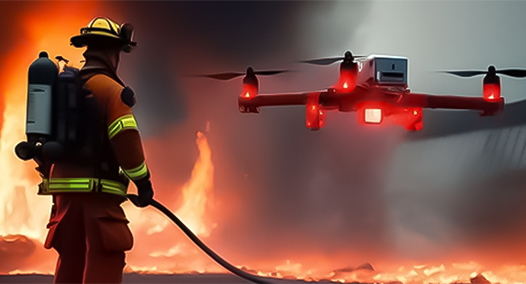
With the growth of construction density, the development of high-rise buildings, large industrial centers and complex infrastructures, the need for more accurate, faster and smarter fire detection and suppression systems is increasingly felt. Although conventional detection and suppression technologies (such as smoke/heat detectors, sprinklers, extinguishing gases) are effective, they often face challenges such as delayed detection, false alarms, inefficient use of extinguishing agents and incomplete incident management. In this article, we review the applications of Artificial Intelligence (AI) in two main areas — fire detection systems and fire suppression systems. First, the technical foundations of AI technologies and sensors are reviewed, then the design framework, application examples, challenges and future prospects are described. The goal is to provide a technical, reliable and practical perspective for consulting firms, designers and employers of detection and suppression systems.
Introduction
Fire detection and extinguishing systems are essential for the protection of human life, property and the environment in buildings and industrial facilities. However, there are several technical and practical limitations in their current design:
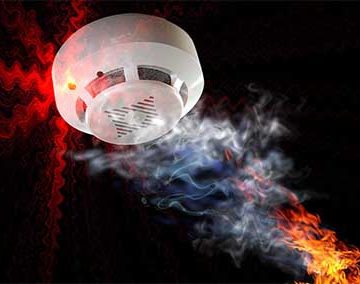
The delay time between the start of a fire and the occurrence of detection by smoke/heat sensors: smoke must reach the detector or the temperature must reach a critical level for the system to react.
High false alarm rate (e.g. smoke caused by steam or dust being mistakenly detected as fire).
Inability to quickly and accurately analyze the path of fire and smoke spread in the building or facility, leading to late or inadequate decision-making.
High consumption of extinguishing agents (water, gas, foam), especially in cases where the fire is not properly detected or controlled.
Complicated maintenance and servicing with high costs and failure to predict possible equipment failures.
Recent advances in the Internet of Things (IoT), advanced sensors, smart cameras, edge computing and, especially, artificial intelligence, have enabled the design of a new generation of systems that offer “faster detection”, “smarter response” and “more optimal control”. The market study shows that the fire protection industry is moving towards AI-based solutions.
MarketsandMarkets
+1
1. Artificial Intelligence Technologies in Fire Detection
1.1 Sensors and Input Data
In the fire detection sector, AI operates based on a combination of data:
Images and videos from fixed or PTZ cameras (with flame, smoke, heat radiation detection)
Sensors for smoke, heat, CO/CO₂ gas, humidity and temperature
Infrared (IR) and ultraviolet (UV) sensors for early detection of flame or abnormal heat
IoT networks that send data to the central system in real time.
An example of recent research is the RGB+IR+UV hybrid system in fire detection that works with artificial intelligence and has had very good results.
ScienceDirect
1.2 Intelligent Processing and Early Detection
Using machine learning (ML) and deep learning algorithms, fire alarm systems can perform the following:
Image analysis: Convolutional neural networks (CNN) to detect smoke or flames in camera frames.
arXiv
+1
Sensor fusion: For example, combining image data with temperature sensors and gas sensors to reduce false alarms.
Behavioral analysis: Monitoring unusual patterns (e.g., sudden increases in temperature or gas in an area) and sending an alert before an explosion or fire spreads.
Edge processing: Analyzing data at the location (control panel or local gateway) to reduce communication latency. One study found that the average detection time was 5.8 seconds.
MDPI
1.3 Benefits in Fire Detection
Reduced detection and response time, resulting in reduced damage and fire spread.
Reduced false alarms and improved user/manager confidence.
Wider coverage with cameras and sensors in open spaces or with high ceilings, where traditional smoke/heat sensors are less effective.
International Fire & Safety Journal
+1
Potential for intelligent data analysis for preventive maintenance of systems and system design improvements.
1.4 Challenges
Requirement of extensive and diverse training data to train algorithms (variation of environment, type of flame, smoke, light conditions).
ResearchGate
Network and processing infrastructure (especially in older buildings or decentralized facilities).
Cybersecurity considerations and connectivity to IoT networks.
controlfiresystems.com
High initial cost to install and operate comprehensive intelligent systems.
2. Artificial Intelligence Technologies in Fire Fighting
2.1 Intelligent Fire Fighting System Design
New fire fighting systems incorporating AI can not only be activated after fire detection, but also respond in a much shorter time and with higher accuracy. An example of such a system is the Edge-AI designed system, which reported an average detection of 5.8 seconds and flame extinction in 13.2 seconds.
MDPI
Main components include:
Intelligent detection system: Same as the announcement section, with AI algorithms
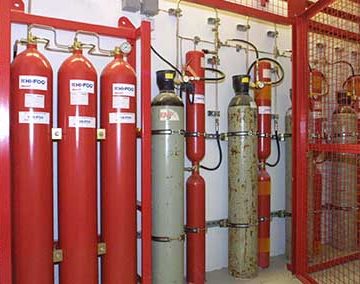
Guided extinguishing system: nozzles or sprays (water, foam, gas) with the ability to precisely target the fire area
Management system that predicts the path of fire and smoke spread and suggests the best extinguishing strategy
Integration with intelligent building systems (BMS) and emergency ventilation, fire door control, evacuation routes.
2.2 Targeted control and consumption optimization
AI can estimate the exact location of the fire, the path of heat and smoke spread, and its intensity at the time of fire, then based on that:
Activate only the necessary nozzles, not the entire system, to save firefighting resources.
Reduce the response time and control the fire before it spreads widely.
Activate the ventilation system intelligently by predicting the spread of smoke

No comments